Address
Building 1, No. 22, Shexi Yongping Road,
Dongguan, Guangdong, China
Work Hours
Monday to Friday: 7AM - 7PM
Weekend: 10AM - 5PM
Address
Building 1, No. 22, Shexi Yongping Road,
Dongguan, Guangdong, China
Work Hours
Monday to Friday: 7AM - 7PM
Weekend: 10AM - 5PM
Epoxy and resin floors are most at risk during cure and under point loads. This guide covers timing, thickness from 2 mm to 12 mm, condensation control and a resin trial plan.
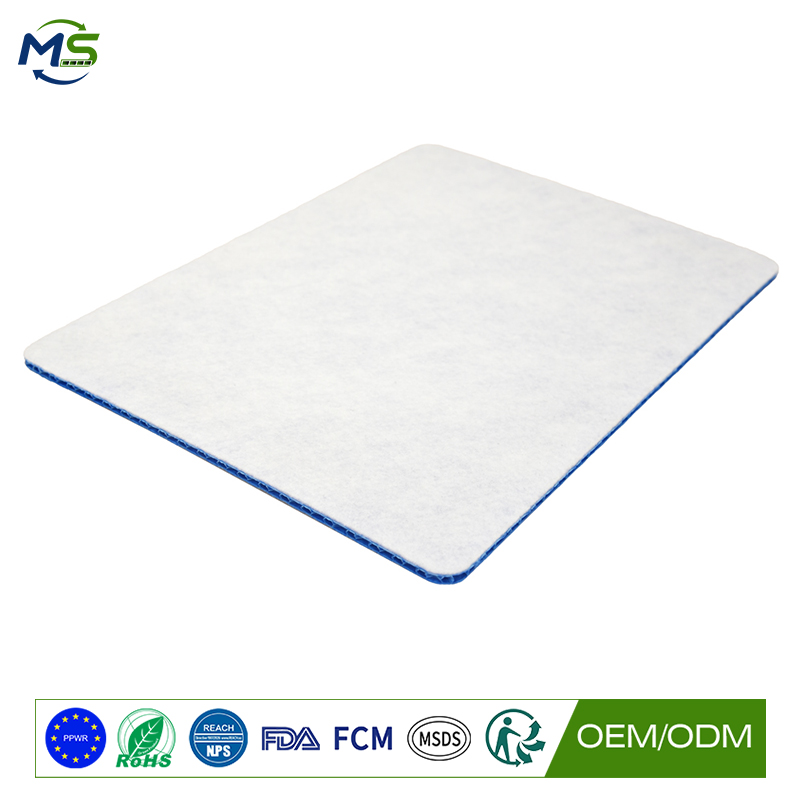
A resin floor is poured as a liquid and becomes a finished surface within days, which means the highest-risk period is not the handover but the window between. Traffic too early, moisture trapped against the coat, or indentation from point loads all leave marks that cannot be polished out. This article looks at epoxy and resin floor protection and explains how to sequence protection around the cure. The focus is timing, breathability and load spreading.
Resin floors have a specified cure time before they can take traffic, and that time changes with temperature and humidity. Protecting too early can trap solvent or moisture; protecting too late means the floor is already exposed. The protection plan has to be written into the programme alongside the coating specification.
Once cured, the surface is tough in compression but still vulnerable to point loads and to indentation from concentrated weight. A rigid PP honeycomb protection board spreads those loads instead of letting a trolley wheel press a permanent mark into the coat.
Because polypropylene does not absorb water, a honeycomb panel does not hold moisture against the coating the way a fabric or paper layer does. That is the property that matters most on resin.
Resin floors are often specified in industrial and commercial areas where loads are higher than in a domestic interior, so the thickness decision usually sits in the middle or upper part of the 2 mm to 12 mm range. Choose for the heaviest crossing, not the average one.
For light foot traffic after a decorative resin coat, a mid thickness is sufficient. Where pallet trucks, scissor lifts or machinery are planned, the thicker boards prevent the concentrated dents that resin cannot recover from.
| Board group | Typical thickness | Where it earns its place | Watch-outs |
|---|---|---|---|
| Light-duty panel | 2-3 mm | Decorative resin after full cure, foot traffic only | Not for wheeled loads |
| General floor panel | 4-6 mm | Commercial resin under site traffic and hand tools | Confirm cure before covering; tape seams |
| Heavy-duty panel | 8-10 mm | Pallet trucks, scissor lifts, machinery moves on resin | Heavier handling across large areas |
| Maximum protection | 12 mm | Plant installation over finished resin floors | More than light fit-out needs |
Confirm the coating supplier’s full-cure time in writing and add a margin before protection is laid, unless the supplier has approved earlier covering. Where early covering is allowed, ventilation matters more than cushioning.
Lay boards dry and clean, with seams taped so that dust from following trades does not migrate underneath. On resin, dust under a panel is abrasive and will dull the surface.
Lift periodically during long programmes to check the coating and to dry any condensation. A board that is easy to lift and re-lay makes that inspection realistic rather than theoretical.
Cardboard absorbs moisture and then transfers it to the coating, and it flattens under load so it stops protecting. Foam rolls cushion but can trap condensation against a resin surface.
Plywood is rigid and re-usable but heavy, and it holds water at the edges where it sits on the coating. It is also slow to fit across a large industrial floor.
A PP honeycomb board is rigid, light, non-absorbing and wipe-clean. On a resin floor those four properties matter more than raw cushioning.
Agree the cure window with the coating supplier first, then protect half a cured area with the board and leave the rest on the current method. Inspect for indentation, dulling and any moisture marking at set intervals.
Run a deliberate point-load test: place the heaviest realistic wheel or foot on a sample panel and check the coating underneath after a set time. This single test usually decides the thickness.
Record how the boards handled condensation and how easy they were to lift and re-lay, because on resin the inspection routine is part of the protection.
State the coating type, the specified cure time, the substrate and the loads that will cross the floor. Ask for the recommended thickness, facing, panel size and fire performance, and say whether the site has hot works or chemical exposure.
Ask for guidance on covering timing and ventilation, and on seams and edges. Custom sizes help on industrial floors where the grid is regular and standard sheets create unnecessary cutting.
For a quotation or sample panel, contact service@mingplastics.com or WhatsApp +86 189 3887 1524. Include the surface type, floor area, trades on site and expected duration so the recommended thickness, facing and fire performance can be confirmed before you order.
Resin protection is a sequencing problem as much as a load problem. Confirm full cure, use a non-absorbing rigid panel, tape seams against dust, and choose thickness for the heaviest wheel load.


