Address
Building 1, No. 22, Shexi Yongping Road,
Dongguan, Guangdong, China
Work Hours
Monday to Friday: 7AM - 7PM
Weekend: 10AM - 5PM
Address
Building 1, No. 22, Shexi Yongping Road,
Dongguan, Guangdong, China
Work Hours
Monday to Friday: 7AM - 7PM
Weekend: 10AM - 5PM
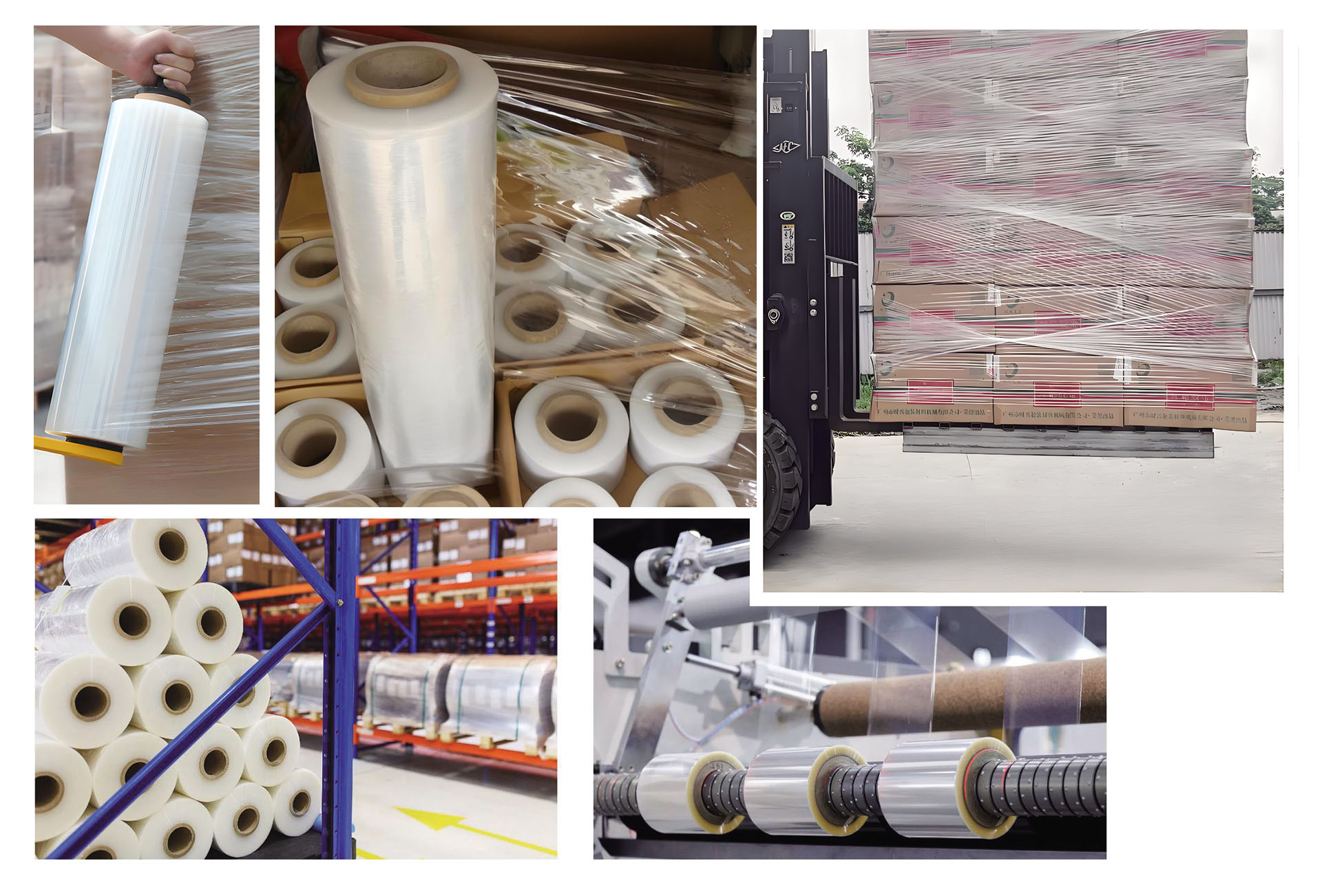
Nano stretch film gives businesses a way to review two problems together: the cost of wrapping each pallet and the single-use film left behind when that pallet is unpacked. The opportunity is to use less material while maintaining the load protection the job requires. MingPlastics promotes potential cost savings of up to 50% compared with conventional stretch film through material efficiency. That is a supplier-stated opportunity, not a guaranteed result for every load. Its product-page thickness schedule covers 8, 10, 12, 15, 17, 20 and 23 μm, with different grades for hand and machine wrapping.
A useful comparison starts with the way a business currently wraps its goods. If a conventional film needs extra turns to keep a load together, the purchasing price tells only part of the story. The real question is whether a different film can do the same job with fewer grams per pallet, without increasing interruptions or compromising protection. This is where nano stretch wrap film deserves a practical trial rather than a decision based on thickness alone.
Mingskye’s range on MingPlastics is described as a 55-layer cast-film construction. The product description assigns different functions to the cling surface, core and nano functional layers: adhesion, processability, strength and toughness. That construction is intended to make more effective use of the material, rather than relying only on a heavier film to achieve the required performance.
The potential advantages over an existing conventional wrap are lower material consumption, a suitable balance of stretch and toughness, and less discarded wrapping after delivery. None follows automatically from the word “nano.” A well-matched conventional film may already run efficiently. The comparison should use the actual roll being replaced and the same type of load, not an unspecified ordinary film chosen to make the new one look better.
The stretch wrap film specification tables list more than one thickness and more than one grade. For buyers searching for 8um nano stretch film, the important detail is that the 8 μm entry appears in the hand-use table, under High end Stiff Film (F). It is not listed as an automatic-machine grade.
| Published product-page grade | Use listed in the table | Available thickness entries |
|---|---|---|
| High end Stiff Film (F) | Hand wrapping | 8, 10, 12 μm |
| Standard (A) | Hand wrapping | 15, 17, 20, 23 μm |
| Genius (D) | Machine wrapping | 12, 15 μm |
| Titan (K) | Machine wrapping | 12, 15 μm |
| Xeon (C) | Machine wrapping | 15, 17, 20 μm |
| Zeon (B) | Machine wrapping | 12, 17, 23 μm |
| Arteon (E) | Machine wrapping | 10, 12 μm |
These are the entries in the specification tables displayed on the nano-film product page; the tables themselves are labelled conventional hand-use and machine-use specifications. Confirm which quoted grade has the stated nano-layer construction. The schedule is not evidence that every listed gauge belongs to one identical nano formulation.
For a manual operation, 8 μm may be a candidate worth discussing alongside 10 and 12 μm. For machine wrapping, begin with the machine-use grades and the wrapper’s operating requirements. The listed 15, 17, 20 and 23 μm options should not be dismissed simply because thinner options exist. Let the load and the trial results decide. Request the exact grade code with the thickness so a quotation can be checked against the right row, rather than relying on a micron figure without context.
The MingPlastics product description states that elasticity, stickiness and toughness can reduce costs by 50% through material efficiency. Expressed as a purchasing proposition, nano stretch film offers potential savings of up to 50% versus conventional stretch film, subject to the grade, wrapping setup, load and comparison baseline. The public product information does not provide a complete comparative trial report identifying those conditions.
That leaves a straightforward job for the buyer and supplier: agree on what will be measured. Compare film cost per securely wrapped pallet, using net film consumption rather than roll weight including the core. Film consumption per pallet multiplied by price per kilogram gives the material cost. Keep the currency, units and purchase conditions consistent between the two films.
Then record rewrapping, line stops and any load-protection problems separately. A cheaper material result is not enough if the new setup creates extra work or damaged goods. Conversely, a film with a higher price per kilogram may still deserve consideration if a controlled trial shows that less material is needed for the same job.
Ask the supplier to support the proposed saving with a grade recommendation and a trial on representative loads. A maximum figure belongs in a comparison discussion; it should not be copied into a budget as a guaranteed reduction before the operation has been measured.
The waste case for nano wrapping film is simplest when expressed in material terms. If a business can protect the same load with less film, less wrapping material is consumed for that shipment. After the customer removes it, there is correspondingly less film by mass to collect and manage. That is waste prevention at the wrapping stage, not a promise that the film disappears after use.
This is the practical advantage to pursue over a conventional routine that uses more material than the load requires. It can connect a purchasing objective with an operational waste target: reduce grams of film per pallet while keeping protection acceptable. Measure both successful wraps and film discarded during restarts or rewrapping. Ignoring rejected wrapping would make the material saving look larger than it really is.
Cost savings and waste reduction are different measurements. A claim of up to 50% lower cost does not establish 50% less waste, and neither number establishes an equivalent reduction in carbon emissions. The results depend on the material used and the agreed baseline.
Nor should nano stretch film be described as biodegradable, reusable or zero-waste without evidence for that specific product. Keep removed film in the business’s agreed collection stream and confirm handling requirements with its waste contractor. Using less is a useful goal even when a company has not yet established a closed-loop recycling arrangement.
Start with the existing film, not the replacement. Record the grade, thickness, net film used, wrapping pattern and any recurring problems. Choose loads that represent normal shipments and the more demanding jobs the operation actually handles. A comparison performed only on an easy, uniform pallet may not answer the question for the rest of the business.
Next, ask for a suitable nano stretch wrap film grade. Keep manual and machine trials separate. The product tables distinguish optimal stretch from ultimate stretch, so do not treat the largest elongation figure as a machine setting. Agree on a starting setup and document any changes made during the trial.
A useful trial sheet should answer four questions:
Compare those observations with the current film before expanding the trial. Do not accept a thinner roll simply because it makes an appealing specification. Accept a change when it supports the required protection and a demonstrable material, cost or handling advantage. The earlier guide to choosing nano stretch film beyond thickness explains why operating range and load containment belong in the same decision.
For the next enquiry, send a short wrapping brief rather than asking only for the cheapest 8 μm or 12 μm roll. Include whether wrapping is manual or automatic, the current grade and thickness, pallet dimensions, load weight, equipment details and the problem that needs solving. State any special handling or storage conditions. If film waste is the priority, include the current consumption measurement as well.
The customizable multilayer stretch film product page provides a starting point for discussing Mingskye options. Ask for a technical sheet tied to the quoted grade, the applicable thickness and trial conditions. That is especially important where a general product-family description sits above a table containing several different grades.
The aim is not to replace every conventional roll with the thinnest nano film. It is to stop paying for material that the load does not need, while retaining the protection it does. A suitable grade can make lower packaging consumption and less single-use waste part of the same improvement project.
Discuss a nano stretch film trial with MingPlastics: email service@mingplastics.com with your wrapping brief. Request a comparison against your current film, including the basis for any proposed savings of up to 50%, before moving to a larger order.