Address
Building 1, No. 22, Shexi Yongping Road,
Dongguan, Guangdong, China
Work Hours
Monday to Friday: 7AM - 7PM
Weekend: 10AM - 5PM
Address
Building 1, No. 22, Shexi Yongping Road,
Dongguan, Guangdong, China
Work Hours
Monday to Friday: 7AM - 7PM
Weekend: 10AM - 5PM
A dual running reconciliation sheet keeps the counts for the incumbent drum and the new reel separate while both are in service. ... Ask Mingskye for a sample.
A dual running reconciliation sheet keeps the counts for the incumbent drum and the new reel separate while both are in service. It reconciles despatches, returns, losses, repairs and stocks at the warehouse, the dock and customer sites to one date per period. Mixing the two populations in a single figure hides exactly the difference the pilot is meant to measure. The sheet names the preparer and the reviewer, and any unexplained difference stays visible rather than being absorbed into a rounding line.
This page covers dual running reconciliation sheet in six sections: Treating in transit reels; Writing a pilot scope statement; Setting the pilot stop rule; Why tare weight is recorded per batch; Keeping an exclusion register; Verifying disposal volumes. Each section answers one practical question and can be read on its own.
In transit reels are the most common source of a disputed return rate.
Define the cut off time, the document that starts the transit state and the handover note that ends it. Record the count at period close.
Where a leg crosses a period boundary, show the units in a separate row. That keeps the current period figure reproducible when the late return arrives.
A pilot scope states what the trial covers and what it deliberately excludes.
Name the lane, cable types, reel count, duration, excluded routes, observation points, stop rule and the KPI owner. State which records are kept at the warehouse and at handover.
A narrow written scope is easier to evaluate than a broad informal trial. It also prevents a favourable result on one easy lane being presented as proof for the whole network.
For terminology and test-method context see GHG Protocol Corporate Value Chain (Scope 3) Accounting and Reporting Standard. The guidance on this page is practical handling guidance, not a test report or a certificate.
A stop rule names the observation that ends the trial before its planned finish.
Include cable damage, a repeated joint failure and a handling issue that cannot be controlled at the dock. State who can call the stop and what record is completed afterwards.
A trial without a stop rule tends to run until a convenient result appears. Writing it first protects the operator and gives the supplier a clear boundary.
| Operations question | Short answer | Measure to track | In this guide |
|---|---|---|---|
| What should be checked about treating in transit reels? | In transit reels are the most common source of a disputed return rate. | Define the cut off time, the document that starts the transit state and the handover … | Section 1 |
| What should be checked about writing a pilot scope statement? | A pilot scope states what the trial covers and what it deliberately excludes. | Name the lane, cable types, reel count, duration, excluded routes, observation points, stop rule and … | Section 2 |
| What should be checked about setting the pilot stop rule? | A stop rule names the observation that ends the trial before its planned finish. | Include cable damage, a repeated joint failure and a handling issue that cannot be controlled … | Section 3 |
| Why tare weight is recorded per batch? | Tare weight is a cheap signal that a construction has changed between deliveries. | Weigh a defined sample from each batch on a calibrated scale and log the result … | Section 4 |
Tare weight is a cheap signal that a construction has changed between deliveries.
Weigh a defined sample from each batch on a calibrated scale and log the result with the delivery reference. Investigate a step change before the reels reach the winding line.
The figure also feeds freight and disposal calculations. Recording it once per season leaves both uses unsupported when a reviewer asks for the source.
An exclusion register lists the routes that will not switch and the reason each one stays out.
Typical entries include one way export lanes with no return partner, cable specified on a certified wooden drum and receivers unable to segregate returned reels. Each row carries a review date.
Publishing exclusions strengthens a sustainability claim. A programme that states where it does not apply is easier to defend than one that implies every despatch has already changed.
Disposal volumes should be reconciled to a document the site already keeps.
Match collector tickets, waste transfer notes and internal stock movements for the same period. Record any gap and the likely reason rather than adjusting a figure to fit.
A verified volume becomes the denominator in the baseline worksheet. If it is uncertain, say so in the calculation note instead of presenting a precise figure.
In transit reels are the most common source of a disputed return rate. Define the cut off time, the document that starts the transit state and the handover note that ends it. Record the count …
A pilot scope states what the trial covers and what it deliberately excludes. Name the lane, cable types, reel count, duration, excluded routes, observation points, stop rule and the KPI owner. State which records are …
Tare weight is a cheap signal that a construction has changed between deliveries. Weigh a defined sample from each batch on a calibrated scale and log the result with the delivery reference. Investigate a step …
Disposal volumes should be reconciled to a document the site already keeps. Match collector tickets, waste transfer notes and internal stock movements for the same period. Record any gap and the likely reason rather …
References checked by publisher and title on 2026-11-13. Standards and regulations are cited by name only; no performance values are attributed to them. General material and logistics figures in the text are indicative reference values and should be verified against your supplier’s current data sheet and your own trial. Confirm applicability and current versions for your own operation before relying on any of them.
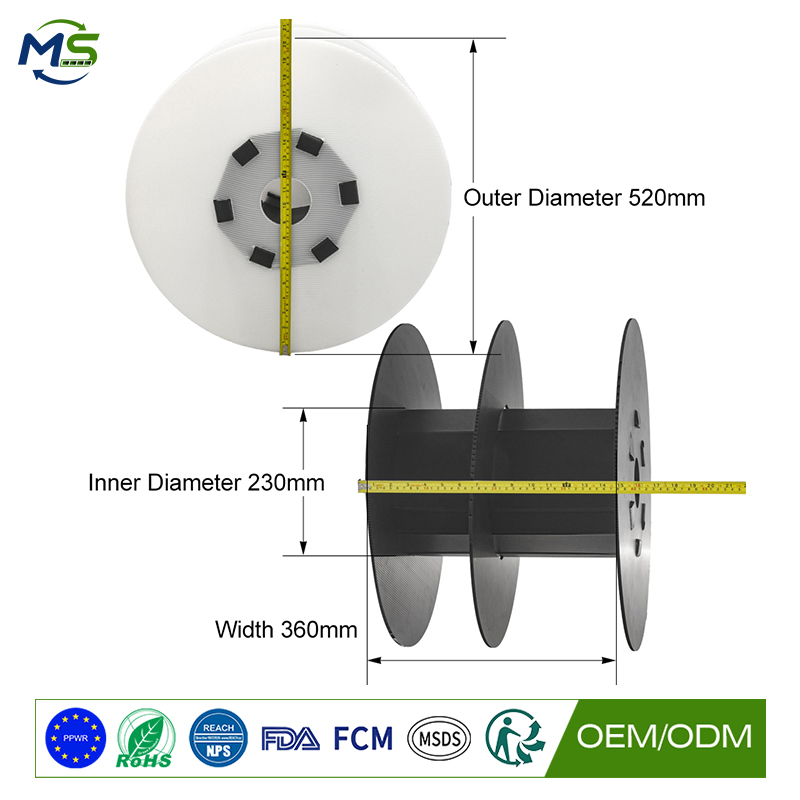
For a quotation, a sample reel or help matching a flange diameter, hub bore and sheet construction to your winding line and return route on site, contact service@mingplastics.com or WhatsApp +86 189 3887 1524. Include the cable type, the destination, the expected cycles per year and the documents your compliance team requires so the recommended specification can be confirmed before you order.
For dual running reconciliation sheet, Define the fields before building the dashboard and keep the pilot evidence together. Disposal volumes should be reconciled to a document the site already keeps.


