Address
Building 1, No. 22, Shexi Yongping Road,
Dongguan, Guangdong, China
Work Hours
Monday to Friday: 7AM - 7PM
Weekend: 10AM - 5PM
Address
Building 1, No. 22, Shexi Yongping Road,
Dongguan, Guangdong, China
Work Hours
Monday to Friday: 7AM - 7PM
Weekend: 10AM - 5PM
Marina work combines salt, water and uneven decks. This guide covers thickness from 2 mm to 12 mm, corrosion and a dockside trial plan.
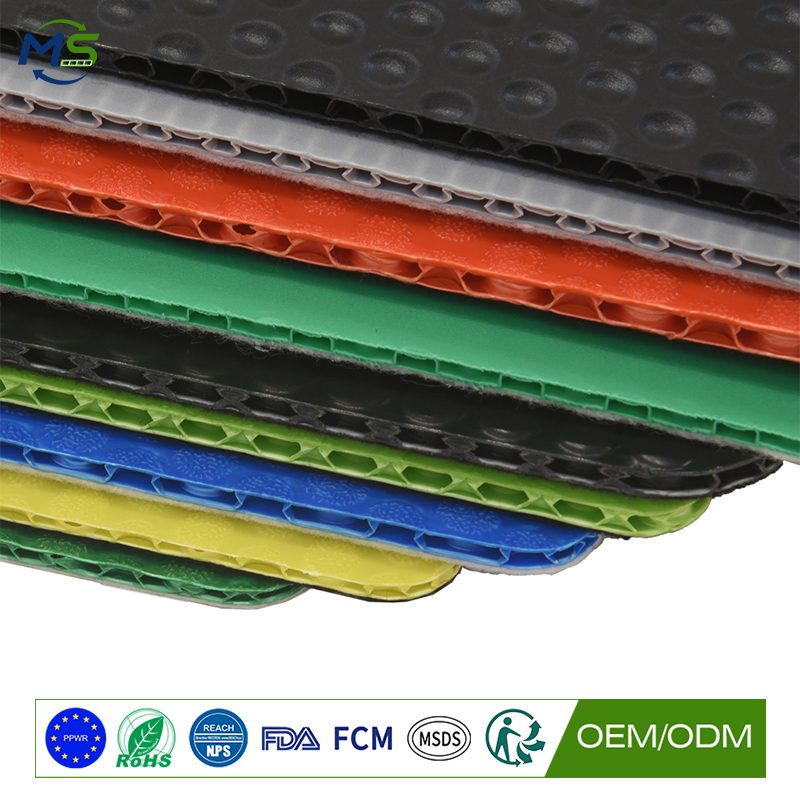
Marina and dockside work combines salt water, constant moisture, uneven surfaces and loads from equipment and boats being moved ashore. Most conventional protection fails quickly. This article looks at protecting dockside surfaces. The focus is corrosion, moisture and uneven ground.
Salt spray and standing water destroy paper, cardboard and untreated timber within days, and they corrode metal. Protection in a marina has to be water-resistant and non-corroding.
A PP honeycomb protection board does not absorb water and resists corrosion, which is why it survives conditions that ruin conventional materials.
Because the panels are light, they can be handled on a pontoon or deck where heavy materials are difficult and unsafe to move.
Dockside work involves equipment, cradles and boat components, so the middle to upper part of the 2 mm to 12 mm range is typical.
For pedestrian routes a mid thickness is enough. Where equipment and cradles are set down on uneven ground, thicker boards bridge dips and spread load.
| Board group | Typical thickness | Where it earns its place | Watch-outs |
|---|---|---|---|
| Light-duty panel | 2-3 mm | Pedestrian routes on even decking | Bridges uneven decks poorly |
| General dockside panel | 4-6 mm | Dock routes with equipment and foot traffic | Keep scuppers clear; secure against wind |
| Heavy-duty panel | 8-10 mm | Cradles, boat components and equipment set-down | Check deck capacity |
| Maximum protection | 12 mm | Heavy lifting equipment on the dock | Confirm surface can take the load |
Expect uneven surfaces: choose a thickness that bridges minor variations rather than following every dip, and check for rocking.
Keep deck drainage and scuppers clear so water runs off rather than sitting beneath the panels.
Secure panels against wind and wash, and inspect after bad weather, because loose panels on a pontoon are both a hazard and a loss.
Plywood absorbs water, delaminates and rots in a marine environment. Metal plate corrodes and is heavy to handle on a deck.
Sheeting is a slip and trip hazard when wet, which is most of the time on a dockside.
A PP honeycomb board resists water and salt, is light to carry and lifts cleanly, which suits marine work.
Protect one section of deck or pontoon and leave a comparable section on the current method. Inspect after weather events and after equipment moves.
Run a cradle or equipment set-down test on a sample panel, then lift and inspect the surface.
Record corrosion, water behaviour and panel security, because on a dockside those decide the method.
State the deck or surface type, whether it is uneven, the equipment loads and the salt and weather exposure. Ask for the recommended thickness and confirm corrosion resistance.
Ask for guidance on securing panels against wind and wash, and about custom sizes for deck layouts.
For a quotation or sample panel, contact service@mingplastics.com or WhatsApp +86 189 3887 1524. Include the surface type, floor area, trades on site and expected duration so the recommended thickness, facing and fire performance can be confirmed before you order.
On dockside, use corrosion-resistant non-absorbing protection, choose a thickness that bridges uneven decks, keep scuppers clear and secure panels against wind and wash.


