Address
Building 1, No. 22, Shexi Yongping Road,
Dongguan, Guangdong, China
Work Hours
Monday to Friday: 7AM - 7PM
Weekend: 10AM - 5PM
Address
Building 1, No. 22, Shexi Yongping Road,
Dongguan, Guangdong, China
Work Hours
Monday to Friday: 7AM - 7PM
Weekend: 10AM - 5PM
GMP areas need approved, documented floor protection. This guide covers thickness from 2 mm to 12 mm, coved junctions and a pharmaceutical trial plan.
Pharmaceutical production adds validation and documentation to every material decision: what enters a GMP area has to be approved, recorded and shown not to affect the product or the environment. This article looks at protecting floors in pharmaceutical facilities. The focus is approval, documentation and protecting validated surfaces.
Materials entering a pharmaceutical production area must be approved, and their use recorded, because anything that could affect product quality or the environment has to be accounted for.
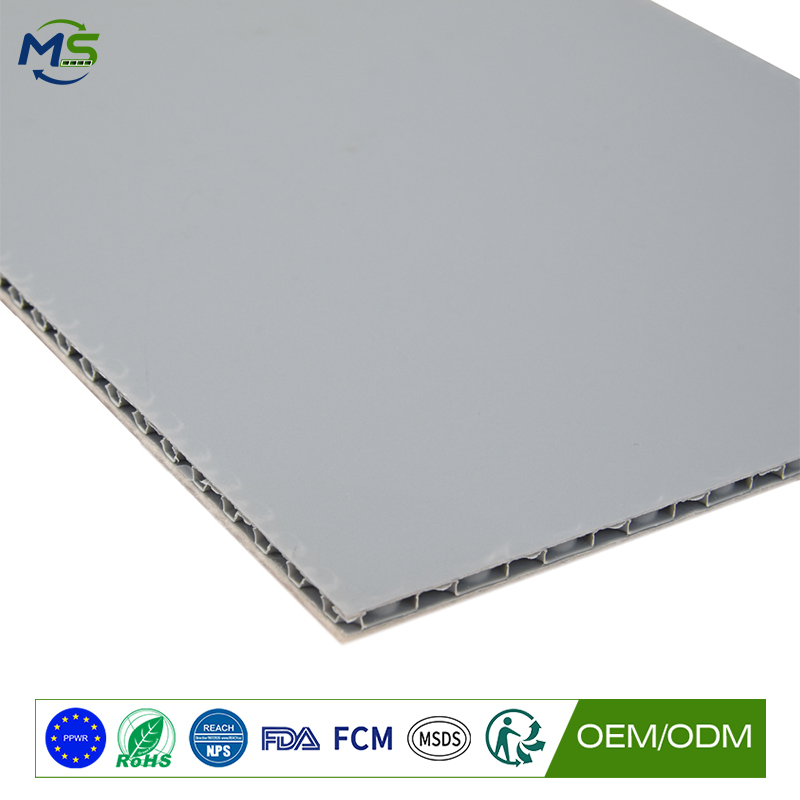
A PP honeycomb protection board is non-shedding, non-absorbing and cleanable, which is why it can be considered for GMP routes where timber and paper products cannot.
Confirm the material with QA before it enters, and keep the approval with the work documentation.
Pharmaceutical facilities move equipment, vessels and palletised material, so the middle to upper part of the 2 mm to 12 mm range is typical for routes.
For pedestrian routes a mid thickness is enough. Where process equipment is moved, thicker boards protect seamless floors and their coved junctions.
| Board group | Typical thickness | Where it earns its place | Watch-outs |
|---|---|---|---|
| Light-duty panel | 2-3 mm | Pedestrian routes outside production suites | No load spreading for equipment |
| General GMP panel | 4-6 mm | Production routes with trolley traffic | QA approval required; protect coves |
| Heavy-duty panel | 8-10 mm | Process equipment and vessel moves | Check seamless floor and cove tolerance |
| Maximum protection | 12 mm | Heavy process installation | Confirm floor capacity |
Seamless pharmaceutical floors are coved at the wall junction, and that detail is both hygienic and vulnerable. Protect the cove rather than butting panels into it.
Confirm compatibility with the site’s cleaning and sanitisation agents, and clean panels to the same standard as the surrounding floor.
Record what was used, where and when, because a change-control or QA review may ask for that history.
Cardboard and timber are generally unacceptable in GMP areas: they shed, absorb and cannot be cleaned or documented to standard.
Plywood is heavy, absorbs cleaning agents and splinters at cut edges, which is a contamination risk.
Matting has its place in specific zones but is not temporary floor protection. A PP honeycomb board is cleanable, non-shedding and documentable.
Get QA approval first, then protect one route and keep a comparable route on the current method. Inspect on the area’s cleaning schedule.
Run a cleaning test with the site’s sanitisation agent on a sample panel, then check for residue and degradation.
Record the approval, areas protected and inspection results, because in a validated facility that record is part of compliance.
State the floor type, the cleaning and sanitisation agents, the equipment loads and the fire performance required. Ask for confirmation that the board is non-shedding and non-absorbing.
Request documentation to support QA approval, and ask about custom sizes for standard production routes.
For a quotation or sample panel, contact service@mingplastics.com or WhatsApp +86 189 3887 1524. Include the surface type, floor area, trades on site and expected duration so the recommended thickness, facing and fire performance can be confirmed before you order.
In pharmaceutical facilities, get QA approval and keep the documentation, protect coves and junctions, and confirm cleaning agent compatibility before specifying.