Address
Building 1, No. 22, Shexi Yongping Road,
Dongguan, Guangdong, China
Work Hours
Monday to Friday: 7AM - 7PM
Weekend: 10AM - 5PM
Address
Building 1, No. 22, Shexi Yongping Road,
Dongguan, Guangdong, China
Work Hours
Monday to Friday: 7AM - 7PM
Weekend: 10AM - 5PM
Server migrations move racks along routes built for people. This guide covers thickness from 2 mm to 12 mm, turning points and a migration trial plan.
A server migration moves heavy racks along routes that were built for people, not for rolling loads, and the cabling work that follows leaves floors exposed for days. This article looks at protecting floors during IT migration. The focus is rack routes, cable pathways and protecting rooms that stay live throughout.
A loaded rack on castors concentrates several hundred kilograms onto a few small wheels, and the route to the server room was designed for foot traffic. That mismatch is where floor damage happens.
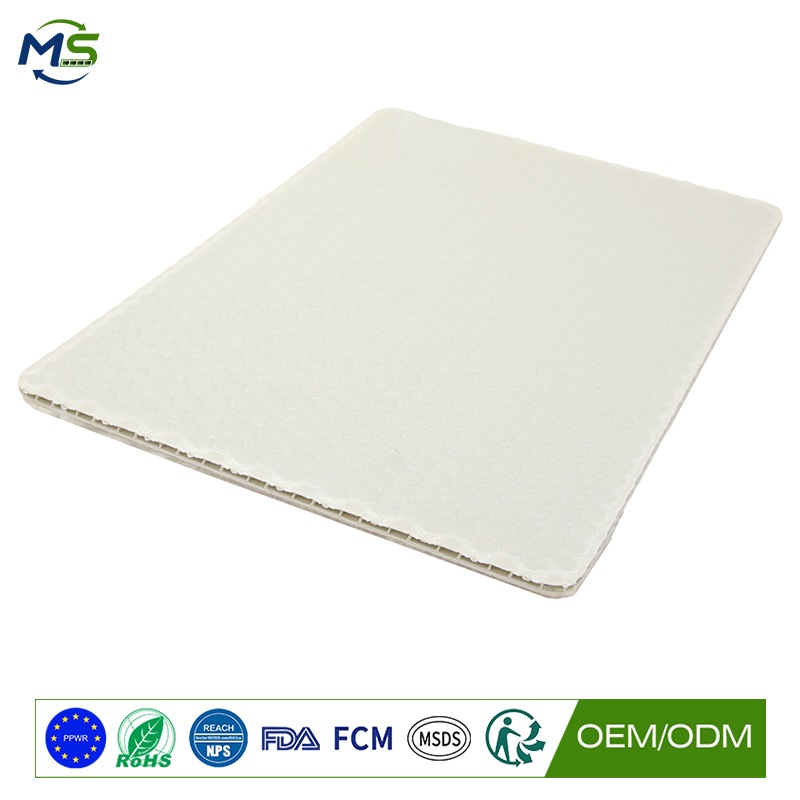
A rigid PP honeycomb protection board spreads rack loads along the route and protects the floor at turning points, which is where castors scrub hardest.
Because the panels are light, they can be placed along a route that passes through finished office areas.
Rack moves and cable work involve concentrated rolling loads, so the middle to upper part of the 2 mm to 12 mm range is typical.
For cable pulling and foot traffic a mid thickness is enough. Under rack moves, the thicker boards give the spreading that protects the floor covering and its joints.
| Board group | Typical thickness | Where it earns its place | Watch-outs |
|---|---|---|---|
| Light-duty panel | 2-3 mm | Cable pulling routes and foot traffic | No protection against rack loads |
| General migration panel | 4-6 mm | Corridor routes with trolley traffic | Widen protection at turns |
| Heavy-duty panel | 8-10 mm | Rack moves and set-down at thresholds | Build transitions at level changes |
| Maximum protection | 12 mm | Fully loaded racks and storage arrays | Confirm floor capacity |
Protect the full route including door thresholds and lift interfaces, because those are where racks are set down and wheels drop over edges.
Widen protection at turning points, and plan turns so they happen on panels rather than at the edge of them.
Confirm what can enter a live server room, and keep panels clean, since contamination control still applies during migration.
Plywood is the usual rack-route protection but is heavy to carry through office areas and absorbs water from cleaning.
Anti-static matting is correct inside the room but is not a route protection and is expensive to deploy along a corridor.
Sheeting slides under castors and tears. A PP honeycomb board spreads load at a weight one person can place.
Protect one rack route and leave a comparable route on the current method. Inspect after each rack move and before the room goes live again.
Run a rack move over a sample panel, then lift and check the floor covering and joints.
Record threshold and turning point condition, because on a migration those are where damage appears.
State the floor type, the rack weights and castor type, the route including thresholds and lifts, and any static requirements. Ask for the recommended thickness for rack loads.
Ask for guidance on turning points and on keeping live rooms clean, plus custom sizes for standard aisle routes.
For a quotation or sample panel, contact service@mingplastics.com or WhatsApp +86 189 3887 1524. Include the surface type, floor area, trades on site and expected duration so the recommended thickness, facing and fire performance can be confirmed before you order.
For migrations, protect the whole route including thresholds, widen panels at turns, and use the thick end of the range under loaded racks.


