Address
Building 1, No. 22, Shexi Yongping Road,
Dongguan, Guangdong, China
Work Hours
Monday to Friday: 7AM - 7PM
Weekend: 10AM - 5PM
Address
Building 1, No. 22, Shexi Yongping Road,
Dongguan, Guangdong, China
Work Hours
Monday to Friday: 7AM - 7PM
Weekend: 10AM - 5PM
Cold storage adds temperature and condensation to protection. This guide covers thickness from 2 mm to 12 mm, freeze-thaw handling and a cold store trial plan.
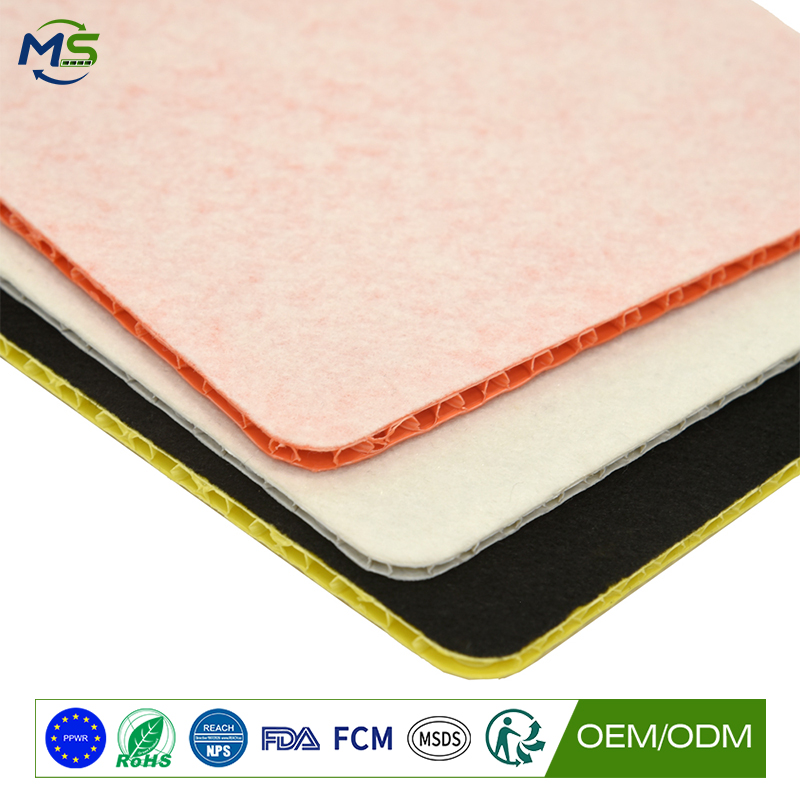
Cold storage adds temperature and condensation to every protection decision: materials behave differently, moisture condenses on warming, and works happen in short spells because nobody can stay inside long. This article looks at protecting cold store and freezer floors. The focus is temperature behaviour, condensation and short working windows.
Materials that are flexible at room temperature can become brittle when cold, and anything absorbent becomes a block of ice. Both are failure modes in a cold store.
A PP honeycomb protection board remains workable at low temperature and does not absorb water, so it does not freeze into place or lock to the floor.
Confirm the operating temperature range with the supplier before specifying, because a freezer is a different specification from a chilled store.
Cold stores carry pallet trucks and palletised stock, so the middle to upper part of the 2 mm to 12 mm range is typical.
For pedestrian routes a mid thickness is enough. Where pallet trucks and racking work are involved, thicker boards protect the floor slab and any coating.
| Board group | Typical thickness | Where it earns its place | Watch-outs |
|---|---|---|---|
| Light-duty panel | 2-3 mm | Pedestrian routes in chilled areas | Not for pallet truck traffic |
| General cold store panel | 4-6 mm | Chilled store routes under pallet traffic | Pre-cut outside; work in short spells |
| Heavy-duty panel | 8-10 mm | Freezer routes and racking work | Check coating tolerance at temperature |
| Maximum protection | 12 mm | Racking and plant installation in freezers | Confirm slab capacity |
Plan for condensation when the space warms: lift panels and dry both surfaces rather than letting water sit against the floor and refreeze.
Keep drainage and defrost water paths clear, since a blocked drain in a cold store quickly becomes an ice hazard.
Work in short spells: pre-cut panels outside so that time inside is spent placing rather than measuring, and inspect at each break.
Cardboard absorbs moisture and freezes solid, after which it cannot be lifted cleanly and stops protecting.
Plywood absorbs water, delaminates in freeze-thaw cycles and becomes heavy and hazardous to handle at temperature.
Matting can work but is semi-permanent and expensive. A PP honeycomb board is non-absorbing and remains handleable in cold conditions.
Pre-cut panels outside, then protect one route and leave a comparable route on the current method. Inspect at each working break.
Run a freeze-thaw check: leave a panel in place through a defrost cycle, then lift and inspect for ice and floor damage.
Record how the panels handled at temperature and how quickly work could be completed, because in a cold store time is the constraint.
State the operating temperature range, the floor and coating type, the pallet truck loads and the working window. Ask for the recommended thickness and confirm low-temperature performance.
Ask for guidance on condensation and defrost cycles, and about pre-cutting panels to size.
For a quotation or sample panel, contact service@mingplastics.com or WhatsApp +86 189 3887 1524. Include the surface type, floor area, trades on site and expected duration so the recommended thickness, facing and fire performance can be confirmed before you order.
In cold stores, confirm low-temperature performance, pre-cut panels outside, manage condensation through defrost cycles and work in short planned spells.


