Address
Building 1, No. 22, Shexi Yongping Road,
Dongguan, Guangdong, China
Work Hours
Monday to Friday: 7AM - 7PM
Weekend: 10AM - 5PM
Address
Building 1, No. 22, Shexi Yongping Road,
Dongguan, Guangdong, China
Work Hours
Monday to Friday: 7AM - 7PM
Weekend: 10AM - 5PM
Co-working spaces reconfigure constantly around members. This guide covers thickness from 2 mm to 12 mm, member routes, storage and a workspace trial plan.
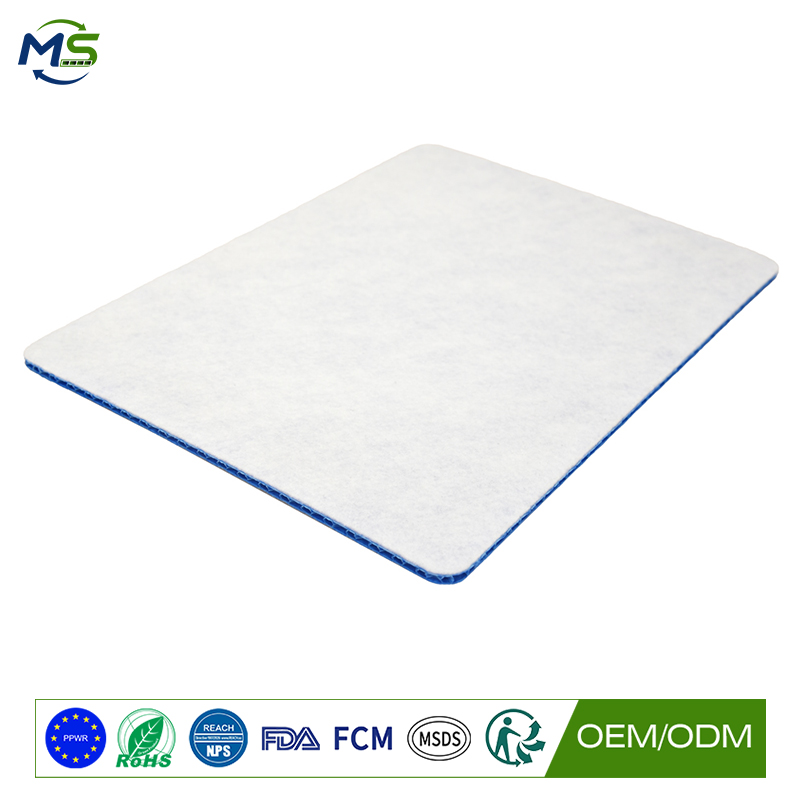
Co-working spaces are reconfigured constantly: partitions moved, furniture rearranged, floors changed while members keep working. Protection has to be reusable, quick and acceptable in a space full of paying clients. This article looks at protecting floors in flexible workspace. The focus is frequent reconfiguration, member-facing routes and reusable protection.
A co-working operator changes layouts several times a year, so protection bought once and used repeatedly is fundamentally different value from protection bought per project.
A PP honeycomb protection board is re-usable, stacks flat and can be brought out for each reconfiguration, which suits an operator’s operating model.
Because the panels lie flat and look tidy, they can be used in member-facing areas without undermining the space’s image.
Co-working reconfiguration involves partitions, desks and furniture, so the middle part of the 2 mm to 12 mm range is typical.
For foot traffic and desk moves a mid thickness is enough. Where partitions and heavy furniture are moved, thicker boards protect the floor from concentrated loads.
| Board group | Typical thickness | Where it earns its place | Watch-outs |
|---|---|---|---|
| Light-duty panel | 2-3 mm | Foot traffic and light desk moves | Not for partition moves |
| General workspace panel | 4-6 mm | Reconfiguration routes with furniture trolleys | Complete routes before opening |
| Heavy-duty panel | 8-10 mm | Partition moves and heavy furniture | Check floor tolerance |
| Maximum protection | 12 mm | Major layout changes with plant and storage | Confirm floor capacity |
Keep member routes clear, complete and finished, because members are paying clients walking through the works every day.
Plan reconfigurations outside peak hours where possible, and always complete routes before the space opens each morning.
Store panels flat and out of sight during opening hours, since stacked boards in a co-working space look unprofessional and obstruct circulation.
Paper and film are replaced every reconfiguration, which is both wasteful and expensive across a yearly cycle of changes.
Carpet runners look acceptable but slide under furniture trolleys and hold dust in a member-facing space.
Plywood is heavy to store and move for each change. A PP honeycomb board stores flat, moves easily and is used again each time.
Protect one reconfiguration route and keep a comparable route on the current method. Inspect before opening each morning and photograph the same points.
Run a furniture and partition trolley test over the panels, then lift and check the floor.
Record how many reconfigurations each panel survived, because that is the operator’s return on the purchase.
State the floor finish, the typical reconfiguration scope, the furniture loads and whether members are present. Ask for the recommended thickness and about long-term reuse.
Ask for guidance on storage between reconfigurations and on member-facing edge finishing, plus custom sizes for standard zones.
For a quotation or sample panel, contact service@mingplastics.com or WhatsApp +86 189 3887 1524. Include the surface type, floor area, trades on site and expected duration so the recommended thickness, facing and fire performance can be confirmed before you order.
For co-working, buy reusable protection and store it flat between reconfigurations, keep member routes complete each morning, and track reuse across the year.


