Address
Building 1, No. 22, Shexi Yongping Road,
Dongguan, Guangdong, China
Work Hours
Monday to Friday: 7AM - 7PM
Weekend: 10AM - 5PM
Address
Building 1, No. 22, Shexi Yongping Road,
Dongguan, Guangdong, China
Work Hours
Monday to Friday: 7AM - 7PM
Weekend: 10AM - 5PM
New build finishes are most at risk in the final weeks. This guide covers thickness from 2 mm to 12 mm, snagging traffic, client visits and a handover trial plan.
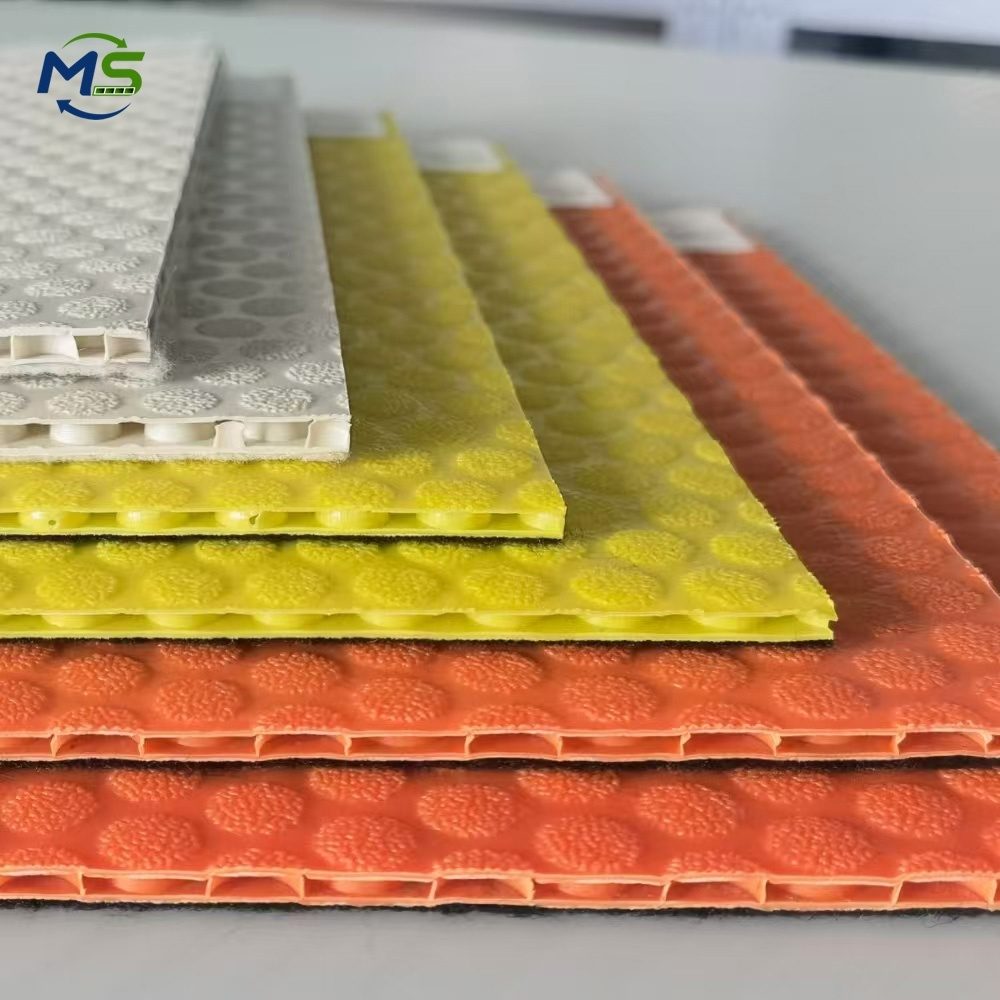
On a new build the last weeks are the riskiest for finishes: floors, stairs and joinery are complete while snagging, cleaning and remedial trades are still moving through. Damage in this window is the most expensive kind, because it delays handover. This article looks at protecting finishes through to completion. The focus is the handover window, snagging traffic and presenting a clean building.
Once finishes are complete, any damage means reordering, re-fitting and re-cleaning, all of which push the handover date. A scratched floor at this stage costs far more than the same scratch earlier in the programme.
The traffic in this window is different too: snagging teams, cleaners, client visits and remedial trades, all moving through finished areas with tools and equipment.
A rigid PP honeycomb protection board protects finished floors and stairs through that window and can be lifted for cleaning and client visits, then re-laid.
Handover-window traffic is mostly foot traffic and light equipment, so the thinner to middle part of the 2 mm to 12 mm range is often sufficient.
Where remedial work involves materials or equipment being moved through finished areas, the thicker boards protect against the concentrated loads that appear during those tasks.
| Board group | Typical thickness | Where it earns its place | Watch-outs |
|---|---|---|---|
| Light-duty panel | 2-3 mm | Finished floors under snagging foot traffic | Not for remedial material moves |
| General handover panel | 4-6 mm | Completed stairs and corridors through to handover | Lift for client visits; finish edges |
| Heavy-duty panel | 8-10 mm | Remedial works and equipment moves in finished areas | Heavier to lift and re-lay for cleaning |
| Maximum protection | 12 mm | Heavy remedial plant in completed areas | More than standard snagging needs |
Keep protection on the routes that snagging and cleaning teams use, and lift it where the client is walking, so visits show the finish rather than the protection.
Tape seams and finish edges, because a loose panel during a client visit is both a trip risk and a poor impression.
Clean both the panels and the floor beneath on a schedule, so the building is presented clean rather than revealed dirty at handover.
Protective films are often applied at installation and work well until they are removed; by the handover window many have torn or reached their removal limit.
Paper and cardboard are cheap but look poor in a finished building, crush under equipment and need constant replacement during snagging.
A PP honeycomb board is presentable, reusable and easy to lift for cleaning and visits, which suits the presentation-sensitive final weeks.
Protect the main routes and stairs in one completed area and leave a comparable area on the current method. Inspect weekly and photograph from fixed points.
Lift the panels for client visits and record the condition of the floor each time, so any change is noticed immediately.
Record the condition at final handover against the photographs, because that record protects the completion date.
State the finishes, the areas still to be snagged, the expected traffic and the handover date. Ask for the recommended thickness, facing and panel size, plus fire performance.
Ask for guidance on lifting and re-laying for cleaning and visits, and about custom sizes for repeated unit layouts.
For a quotation or sample panel, contact service@mingplastics.com or WhatsApp +86 189 3887 1524. Include the surface type, floor area, trades on site and expected duration so the recommended thickness, facing and fire performance can be confirmed before you order.
Protect the handover window: keep routes covered for snagging and cleaning, lift panels for client visits, and record condition at completion.


