Address
Building 1, No. 22, Shexi Yongping Road,
Dongguan, Guangdong, China
Work Hours
Monday to Friday: 7AM - 7PM
Weekend: 10AM - 5PM
Address
Building 1, No. 22, Shexi Yongping Road,
Dongguan, Guangdong, China
Work Hours
Monday to Friday: 7AM - 7PM
Weekend: 10AM - 5PM
Wet trades defeat absorbent protection. This guide covers thickness from 2 mm to 12 mm, drying times, lift-and-air schedules and a wet-trade trial plan.
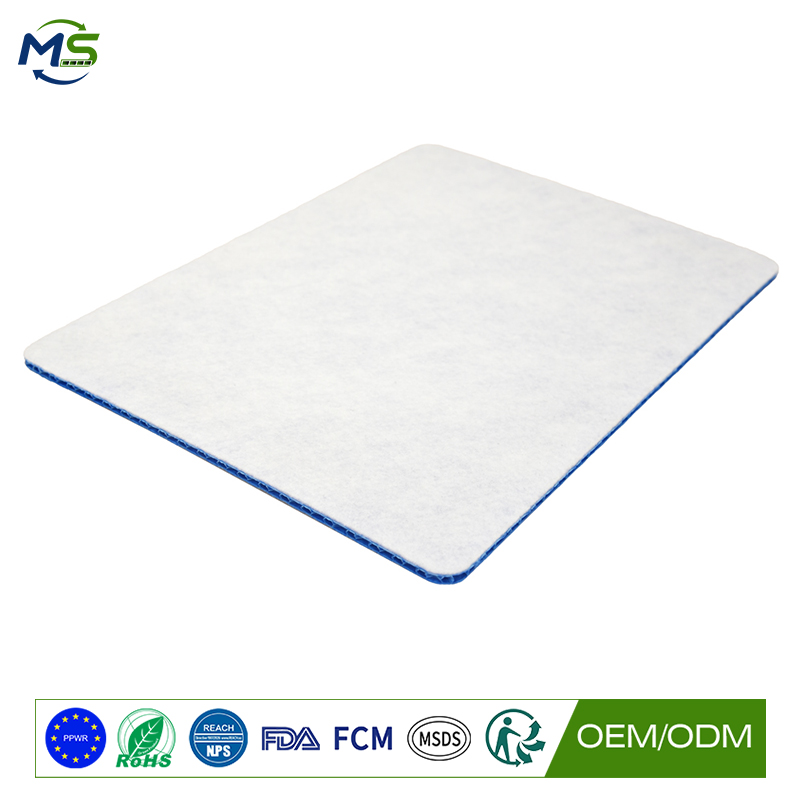
Wet trades introduce the one variable that defeats most protection: water. Coverings that absorb moisture hold it against the surface, and coverings that resist it can trap condensation underneath. This article looks at protecting surfaces when screeds, plastering and tiling are still running. The focus is moisture management, drying times and choosing a board that does not make damp worse.
The first failure is absorption: a paper, fabric or timber covering soaks up water and holds it against the floor or surface, causing staining, bloom or delamination.
The second is trapping: even a non-absorbing covering can hold evaporation against a surface that needs to dry. That is why screeds and plaster have specified drying times and why covering too early causes problems.
A PP honeycomb protection board does not absorb water, which removes the first failure. The second is managed by sequencing: confirm drying requirements before covering, and lift and air the boards periodically.
Around wet trades, thickness is chosen for the loads that follow rather than for the water itself. The middle of the 2 mm to 12 mm range is typical.
Where wet and dry trades share a route, a mid thickness is usually enough. Where materials are delivered over a drying screed, thicker boards spread the load and protect a surface that has not yet reached full strength.
| Board group | Typical thickness | Where it earns its place | Watch-outs |
|---|---|---|---|
| Light-duty panel | 2-3 mm | Dry trades following wet work, light traffic | Not for deliveries over a drying screed |
| General wet-trade panel | 4-6 mm | Shared routes while trades are still running | Lift and air on a schedule |
| Heavy-duty panel | 8-10 mm | Material deliveries over a drying surface | Confirm the surface has gained enough strength |
| Maximum protection | 12 mm | Loaded deliveries over screeds still gaining strength | Check strength before loading |
Get the drying time in writing from the screed or plaster supplier and confirm whether covering is permitted before that time has passed. Where forced drying is used, ventilation matters more than covering.
Lift panels periodically and dry both sides. A non-absorbing board dries quickly, but the surface underneath still needs air.
Keep run-off away from the protected area and avoid ponding at panel edges, where water collects and finds its way underneath.
Paper and fabric are the worst choice around wet trades: they absorb, hold moisture and then tear when lifted wet.
Plywood resists puncture but absorbs water at the edges and can stain a drying surface where it sits. It is also heavy to move when wet.
A PP honeycomb board does not absorb water, dries quickly when lifted and is light enough to reposition as trades move through the building.
Agree drying times with the relevant supplier, then protect one area and leave a comparable area on the current method. Inspect both at set intervals.
Check moisture under the panels at each inspection, and record any condensation on the underside, because that tells you whether the lift-and-air schedule is frequent enough.
Record any staining or bloom on the surface beneath, and adjust the schedule before the problem spreads.
State which wet trades are running, the drying times specified, the surface beneath and the loads that follow. Ask for the recommended thickness and facing, and confirm that the board does not absorb water.
Ask for guidance on lift-and-air schedules and on managing run-off, and about custom sizes for repeated room layouts.
For a quotation or sample panel, contact service@mingplastics.com or WhatsApp +86 189 3887 1524. Include the surface type, floor area, trades on site and expected duration so the recommended thickness, facing and fire performance can be confirmed before you order.
Around wet trades, use a non-absorbing board, confirm drying times in writing and lift and air the panels on a schedule. Manage run-off so water cannot pond at the edges.


