Address
Building 1, No. 22, Shexi Yongping Road,
Dongguan, Guangdong, China
Work Hours
Monday to Friday: 7AM - 7PM
Weekend: 10AM - 5PM
Address
Building 1, No. 22, Shexi Yongping Road,
Dongguan, Guangdong, China
Work Hours
Monday to Friday: 7AM - 7PM
Weekend: 10AM - 5PM
Retail fit-out works overnight around trading floors. This guide covers thickness from 2 mm to 12 mm, customer-safe detailing, overnight storage and a retail trial plan.
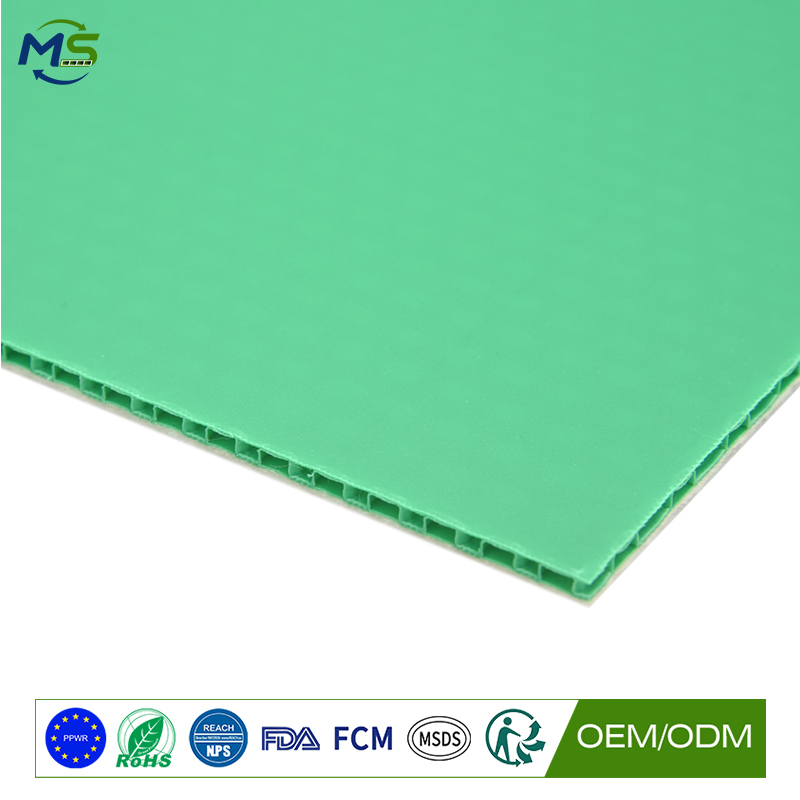
Retail fit-out often happens beside trading floors, and in some cases inside a store that never closes. Protection has to be safe for customers, quick to lay and lift overnight, and presentable. This article looks at protecting retail floors during fit-out. The focus is overnight working, customer-safe routes and protecting finishes that are already in use.
Retail fit-out compresses programme into nights and closed days, so protection must be laid and cleared quickly and repeatedly. Anything slow to fit costs trading hours.
A rigid PP honeycomb protection board can be placed and lifted quickly by a small team, and because it lies flat it can be used on a route that customers also use.
The boards are non-absorbing and wipe-clean, which matters when the route passes through a trading area that has to look presentable the next morning.
Retail floors carry pallet trucks, stock cages and display units, so the middle to upper part of the 2 mm to 12 mm range is usually right for sales-floor routes.
For back-of-house and stockroom areas with lighter traffic, a mid thickness is sufficient. Where display units and palletised stock cross the shopfloor, thicker boards prevent the point dents that show in polished and tiled retail finishes.
| Board group | Typical thickness | Where it earns its place | Watch-outs |
|---|---|---|---|
| Light-duty panel | 2-3 mm | Back-of-house and stockroom floors | Fails under stock cages and pallet trucks |
| General shopfloor panel | 4-6 mm | Sales floor routes under daily stock movement | Finish edges before trading resumes |
| Heavy-duty panel | 8-10 mm | Palletised stock and display unit moves | Heavier to clear each night; plan storage |
| Maximum protection | 12 mm | Shopfitting plant moves and long programmes | More than standard fit-out needs |
Complete and check every route before trading resumes. Pay particular attention to edges and entrances, where a customer is most likely to encounter the protection.
Tape seams and finish edges so there is nothing to trip on, and keep routes as wide as the aisle allows so customers are not forced into an unprotected path.
Store lifted boards flat and out of sight during trading hours, since stacked panels in a stockroom or aisle become an obstruction.
Films and paper are cheap and quick but curl and tear under stock cages, and they need replacing almost every night, which costs the labour that retail programmes do not have.
Plywood protects but is heavy to move in and out each night and awkward to store in a store with no spare space.
A PP honeycomb board is light, quick to place, re-usable across the whole fit-out and cleanable, which suits the overnight rhythm of retail work.
Protect one shopfloor route and keep a comparable route on the current method. Inspect before trading each day and photograph the same points.
Run a stock-cage test over a sample panel for a set number of passes, then lift and check the floor beneath.
Record lay and clear times and how many nights each panel survived, because in retail those numbers decide the specification.
State the floor finish, the aisle widths, what crosses the floor and whether the store trades during works. Ask for the recommended thickness, facing, panel size and fire performance for customer areas.
Ask for guidance on edge finishing, overnight storage and cleaning, and about custom sizes and colours for aisle routes.
For a quotation or sample panel, contact service@mingplastics.com or WhatsApp +86 189 3887 1524. Include the surface type, floor area, trades on site and expected duration so the recommended thickness, facing and fire performance can be confirmed before you order.
Retail protection must be quick to lay, safe for customers and reusable every night. Specify thickness for the heaviest stock movement and finish every edge before trading resumes.


