Address
Building 1, No. 22, Shexi Yongping Road,
Dongguan, Guangdong, China
Work Hours
Monday to Friday: 7AM - 7PM
Weekend: 10AM - 5PM
Address
Building 1, No. 22, Shexi Yongping Road,
Dongguan, Guangdong, China
Work Hours
Monday to Friday: 7AM - 7PM
Weekend: 10AM - 5PM
Scratched glass is replaced, not repaired. This guide covers thickness from 2 mm to 12 mm, non-adhesive restraint, edge protection and a glazing trial plan.
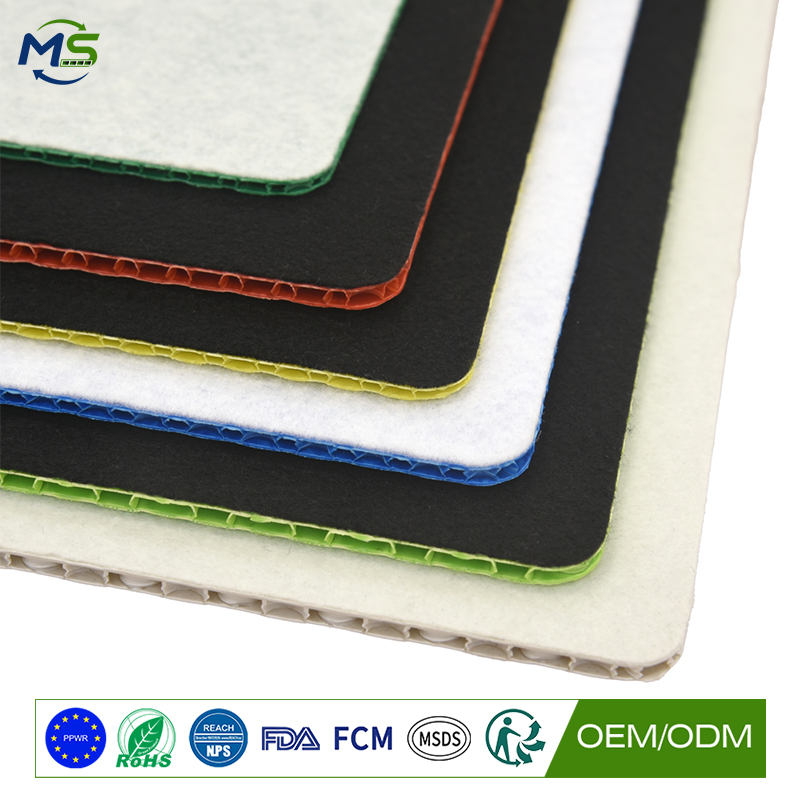
Glazing is one of the few building elements where a scratch is a replacement rather than a repair, and curtain wall units arrive on site early enough to be exposed to everything that follows. This article looks at protecting glass and glazed assemblies during installation and fit-out. The focus is scratch prevention, edge protection and choosing a board that will not mark or bond to the glass.
Glass cannot be polished out, so the cost of damage is the unit plus the crane or access time to replace it. That makes protection a straightforward calculation on any glazed project.
Damage usually comes from contact: tools, ladders, scaffold components and cleaning equipment rather than from load. So the protection needs to be a physical barrier that stays in place and does not itself abrade the glass.
A rigid PP honeycomb protection board gives that barrier. With a felt or fleece facing it cannot scratch the glass, and because it is loose-laid it avoids the adhesive residue problem that glazing manufacturers warn about.
For glazing the decision is usually about rigidity and coverage rather than load: within the 2 mm to 12 mm range, a board stiff enough to stand against the opening without bowing into the glass is what protects.
Thin boards suit small areas and short programmes. Thicker boards suit site hoarding conditions, repeated handling and where panels must span an opening without support.
| Board group | Typical thickness | Where it earns its place | Watch-outs |
|---|---|---|---|
| Light-duty panel | 2-3 mm | Small glazed areas, short programmes, indoor | Bows into openings if unsupported |
| General glazing panel | 4-6 mm | Installed units with trades working around them | Restraint must not contact the glass |
| Heavy-duty panel | 8-10 mm | Site hoarding conditions, repeated handling | Heavier panels at height; plan manual handling |
| Maximum protection | 12 mm | Exposed elevations, long programmes, high wind | More than short indoor work needs |
Protect the edges and corners of units as well as the face, because chips at the edge are as disqualifying as a scratch across the pane.
Avoid anything with adhesive contact on the glass. Use loose-laid panels and mechanical or independent restraint rather than tape on the glazing surface.
Keep the protection clear of weep holes and drainage paths in curtain wall systems so that water management is not blocked during the works.
Applied glazing films are designed for glass and work well, but they are single-use, must be removed within a stated period and can leave residue if left too long.
Cardboard and ply protect against contact but are heavy, absorb water and can themselves mark frames and gaskets. They also blow about on exposed elevations.
A PP honeycomb board is light, water-resistant and re-usable, and with a soft facing it will not scratch glass. It suits the period after installation when trades are still working around the glazing.
Protect one elevation or zone and leave a comparable one on the current method. Inspect at fixed intervals for scratches, edge chips and frame damage, photographing with consistent lighting and angle.
Run a contact test: bring the tools or equipment that typically touch the glazing into contact with a sample panel, then check the glass behind it.
Record whether panels stayed in place in wind and whether any fixings contacted the glass, because on elevations those two factors decide the outcome.
State the glazing type, unit sizes, whether frames are powder coated or anodised, and the access conditions. Ask for the recommended thickness, facing, panel size and fire performance.
Confirm that the system is loose-laid and non-adhesive, and ask for guidance on restraint without contacting the glass. Custom sizes reduce cutting around large units.
For a quotation or sample panel, contact service@mingplastics.com or WhatsApp +86 189 3887 1524. Include the surface type, floor area, trades on site and expected duration so the recommended thickness, facing and fire performance can be confirmed before you order.
Glazing protection is a contact barrier problem, not a load problem. Use a soft-faced, loose-laid panel, protect edges and weep paths, and restrain without touching the glass.


