Address
Building 1, No. 22, Shexi Yongping Road,
Dongguan, Guangdong, China
Work Hours
Monday to Friday: 7AM - 7PM
Weekend: 10AM - 5PM
Address
Building 1, No. 22, Shexi Yongping Road,
Dongguan, Guangdong, China
Work Hours
Monday to Friday: 7AM - 7PM
Weekend: 10AM - 5PM
Terrazzo and heritage floors cannot be replaced, so protection must be reversible and moisture-safe. This guide covers thickness, facing, surveys and conservation approval.
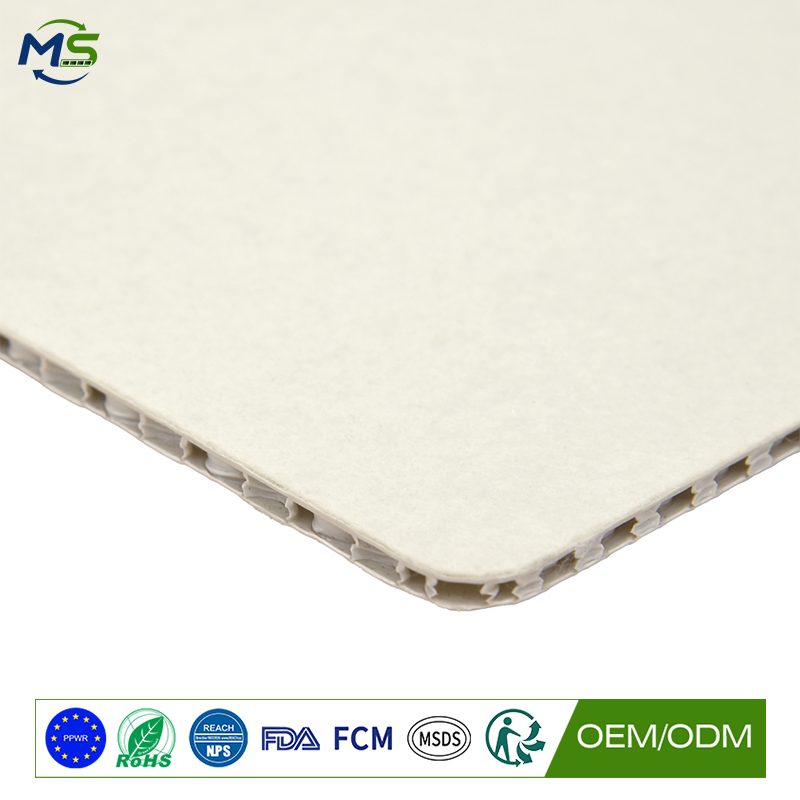
Terrazzo and historic flooring share one problem: the material and the skills to repair it are scarce, so damage is effectively permanent. On those projects the protection plan is not a line item to value-engineer away, it is part of the conservation method statement. This article looks at protecting irreplaceable floors and explains how to specify a board that satisfies a conservation officer. The focus is reversibility, load spreading and avoiding adhesives.
With a replaceable finish, the question is whether protection costs less than repair. With an irreplaceable one, repair may not be possible at any price, so the comparison changes: the question becomes what level of protection removes the risk entirely.
That usually rules out anything adhesive. Tapes and self-adhesive films can leave residue and can pull at a fragile surface, and on heritage work reversibility is normally a requirement rather than a preference.
A loose-laid rigid PP honeycomb protection board is reversible by definition: it is laid, it is lifted, and nothing is bonded to the historic surface. That property is often what gets a method statement approved.
Heritage floors are often uneven, which makes rigidity and load spreading more important than on a flat new slab. The 2 mm to 12 mm range gives room to choose a board stiff enough to bridge minor unevenness without rocking.
Where foot traffic is the only load, a mid thickness with a soft facing is usually accepted. Where scaffolding, displays or heavy items are involved, the thicker boards prevent the point loads that crack terrazzo and old tiles.
| Board group | Typical thickness | Where it earns its place | Watch-outs |
|---|---|---|---|
| Light-duty panel | 2-3 mm | Fragible surfaces, foot traffic only, short works | Bridges uneven floors poorly |
| General floor panel | 4-6 mm | Terrazzo and historic tile under supervised access | Soft facing required; seams taped |
| Heavy-duty panel | 8-10 mm | Scaffold, displays, heavy items over fragile floors | Heavier handling through historic openings |
| Maximum protection | 12 mm | Long programmes, repeated heavy access routes | More than light heritage work needs |
Survey before specifying: note hollow areas, loose pieces and previous repairs, and mark them so protection is not concentrated over a weak spot. Where the floor is very uneven, a thicker board bridges better than a thin one that follows every dip.
Use a felt or fleece facing against the historic surface and avoid anything that could trap moisture. Old substrates often react badly to prolonged damp, so lift and air the boards on a schedule.
Keep a photographic record of the condition before laying and at each lift. On heritage projects that record protects everyone involved and is usually required by the client.
Adhesive films are the most common rejection on heritage work because of residue risk. Felt rolls cushion but hold moisture and can flatten under repeated load.
Plywood is rigid and re-usable but heavy, and transporting sheets through historic doorways and staircases creates its own risk to the building fabric.
A PP honeycomb board is light, rigid, non-absorbing and loose-laid, which makes it easier to get a conservation method statement approved than any bonded or water-holding alternative.
Start with the condition survey and agree the inspection schedule with the conservation officer before any board is laid. Protect a small, low-risk area first and review it after a fixed period.
Check for moisture under the boards at each inspection and look for any change in the surface. Photograph from fixed positions so change is demonstrable rather than argued.
Record how the boards were handled through the building, because on heritage projects damage often happens while carrying protection in, not while it is down.
State the floor type, its condition, any conservation constraints and whether adhesives are permitted. Ask for the recommended thickness, facing, panel size and fire performance, and request confirmation that the system is loose-laid and reversible.
Ask about custom sizes to reduce cutting, and for written guidance on seams, edges and moisture checks. On heritage work, written guidance is usually part of the approval pack.
For a quotation or sample panel, contact service@mingplastics.com or WhatsApp +86 189 3887 1524. Include the surface type, floor area, trades on site and expected duration so the recommended thickness, facing and fire performance can be confirmed before you order.
On irreplaceable floors, specify reversible loose-laid protection with a soft facing, survey condition first, control moisture, and keep a photographic record at every inspection.


